There is a subtle, quiet shift happening among high-performing professionals, intellectuals, and forward-thinking urbanites. For decades, conventional success was measured exponentially: bigger houses, wider suburban footprints, and garages overflowing with items purchased to maintain a specific image.
Yet today, some of the sharpest minds are deliberately choosing less square footage.
They aren’t downsizing out of financial necessity or forced constraint. They are downsizing as an intentional cognitive strategy.
When you look past the surface aesthetic of modern minimalism, a deeper behavioural truth emerges: downsizing is an act of spatial optimization. It is a calculated move designed to reduce cognitive load, reclaim time, and align physical surroundings with personal agency.
Here is the hidden psychology behind why smart people are choosing to live with less space—and why it might be the ultimate modern intelligence test.
1. The Elimination of Visual Noise and “Ego Depletion”
In modern psychology, ego depletion refers to the concept that willpower and cognitive focus are finite daily resources. Every decision you make—from answering an email to choosing what to wear—draws down your mental battery.
What many fail to realize is that physical space passively drains mental energy.
Every object sitting on a counter, every unorganized shelf, and every underutilized room represents a form of visual friction. Neuroscientists at the Princeton Neuroscience Institute found that multiple visual stimuli present in your visual field compete for attention, directly impairing your brain’s ability to process information and focus.
Smart people downsize because they understand that less space equals fewer micro-distractions.
By reducing the physical surface area that demands cleaning, organizing, heating, lighting, and maintaining, they preserve precious cognitive bandwidth for high-value thinking, creative pursuits, and deep work.
2. The Generational Shift: Trading Possessions for Experiential Wealth
Perhaps the most significant psychological driver of downsizing is a profound shift in what people value across the demographic spectrum: the transition from material accumulation to experiential wealth.
Psychological research consistently shows that experiences—travel, learning, dining, relationships, personal development—bring far longer-lasting happiness than physical possessions. This realization connects two distinctly different generations:
- Younger Generations (Gen Z & Millennials): Having witnessed previous generations get weighed down by heavy mortgages and material excess, younger professionals are redefining wealth. They prefer spending income on global travel, creative passions, and career mobility rather than paying for excess square footage. For them, a smaller footprint is the gateway to a richer life outside four walls.
- Older Generations (Empty Nesters & Boomers): Having spent decades managing large family homes, smart older adults are reaching a point of cognitive liberation. They no longer want to be “custodians of things.” Downsizing allows them to unlock home equity, reduce physical maintenance, and spend their mature years making memories, traveling, and spending quality time with loved ones.
Whether at 25 or 65, forward-thinking individuals recognize a universal truth: you cannot store memories in a storage unit. By right-sizing their living space, they align their financial resources and time with what actually brings human fulfilment.
3. Rejecting the “Sunk Cost” of Unused Square Footage
The human brain is prone to cognitive biases, one of the most destructive being the Sunk Cost Fallacy—the tendency to continue investing time, money, or emotional effort into something simply because you’ve already invested in it.
Traditional homeownership often lures buyers into paying for empty rooms:
- The formal dining room used twice a year.
- The guest bedroom that collects dust 350 days out of 365.
- The cavernous basement filled with boxes unopened since 2018.
Intellectually honest individuals eventually ask a logical question: Why am I paying mortgage, tax, heating, and upkeep costs for space I am not actively using?
Downsizing breaks the sunk-cost trap. Smart spatial planners evaluate space by ROU (Return on Utility) rather than raw footprint. By replacing stagnant, single-purpose rooms with flexible, highly engineered environments—like multi-functional folding desks or wall-mounted drop-down dining systems—they extract maximum daily utility from every single square meter.
4. The Paradox of Choice and the Shift to “Curated Living”
Psychologist Barry Schwartz famously described the Paradox of Choice: while we assume having more options brings freedom, it actually creates paralysis, anxiety, and dissatisfaction.
A large footprint encourages accumulation. When you have empty closets, you feel an instinctual nudge to fill them. When you have extra rooms, you buy excess furniture.
Downsizing enforces a healthy constraint. It forces a mindset shift from accumulation to curation.
Smart downsizers don’t view space constraints as a limitation; they view them as an editorial filter. In a intentionally designed footprint:
- Every item must justify its presence.
- Objects are selected for exceptional durability, form, and functionality.
- Furniture adapts to the human, not the other way around.
When your environment contains only what is beautiful, essential, or multi-functional, the paradox of choice dissolves—leaving room for mental stillness.
5. Status Symbol 2.0: Mobility and Autonomy Over Possession
Historically, status was signaled through physical scale—the sprawling estate, the oversized SUV, the mass of possessions.
However, high-level thinkers recognize that modern luxury is no longer defined by accumulation. Modern luxury is defined by frictionlessness, autonomy, and agility.
Excess square footage acts as an anchor. It ties up capital, requires ongoing maintenance contracts, and locks individuals into static locations. Downsizing frees up capital and emotional bandwidth, enabling people to invest in experiences, health, career freedom, and flexibility.
When a living space is compact, elegant, and smartly engineered, it becomes a launchpad rather than a museum of possessions. Smart people downsize because they value their time and freedom far more than the illusion of prestige tied to an empty formal living room.
6. Architectural Ergonomics: The Joy of Spatial Efficiency
There is a distinct psychological satisfaction found in high-efficiency engineering. Consider the interior of a luxury yacht, an executive aircraft, or a high-end Swiss watch: every millimetre is intentional, precise, and optimized.
Smart individuals appreciate this same architectural logic in their homes.
Living smartly in a compact footprint isn’t about living squeezed—it’s about living efficiently. It is the thrill of watching a room transform dynamically throughout the day:
- A high-productivity home office by morning.
- An open-floor yoga studio by afternoon.
- An intimate, clutter-free dining area by evening.
When smart engineering meets spatial design, small spaces don’t feel small—they feel masterful.
Reimagining Your Relationship with Space
Downsizing is not a sacrifice; it is an upgrade in intelligence. It is the deliberate decision to stop managing excess stuff and start engineering a life centered around focus, agility, and peace of mind.
At SpaceSave, we believe your home should work as hard as you do. Our intelligently designed, fold-away, wall-mounted, and multi-functional furniture solutions are built for those who value modern elegance, cognitive clarity, and spatial freedom.
Ready to optimize your space and free your mind? Explore SpaceSave’s collection of modern, space-saving innovations today.
-
Folding Console Storage Table with Chair Compartment
R4 997 – R5 297Price range: R4 997 through R5 297 inc VAT This product has multiple variants. The options may be chosen on the product page -
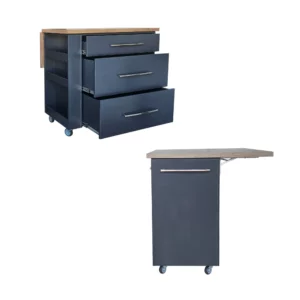
Large Kitchen Island On Wheels, Fold-Out Table & Drawers
R10 997 – R11 997Price range: R10 997 through R11 997 inc VAT This product has multiple variants. The options may be chosen on the product page -
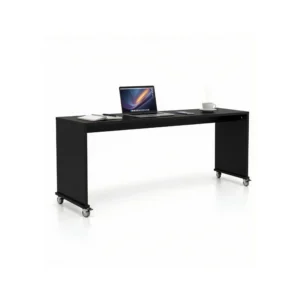
BedBridge Queen Rolling Over-Bed Desk with Wheels
R2 647 – R3 297Price range: R2 647 through R3 297 inc VAT This product has multiple variants. The options may be chosen on the product page